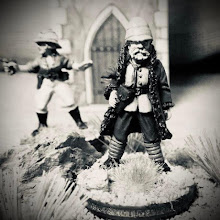
The 2017 Santa for my parents is Father Christmas from Wargames Foundry.


 I'm a retired Colonel of Infantry (Regulars by God!) and Military Historian who likes to play with toy soldiers. I've been married to the love of my life since 1986, I have 5 honorable sons (my geeks in training), 4 daughters-in-law, al2 grandsons, 1 granddaughter, 1 dog and a gazillion miniatures.
Hobbies include . . . wait for it . . . Toy Soldiers, Reading, Wargaming, Reading about Toy Soldiers, History, Reading about Wargaming, Gardening, Reading about History and Reading.
I'm a retired Colonel of Infantry (Regulars by God!) and Military Historian who likes to play with toy soldiers. I've been married to the love of my life since 1986, I have 5 honorable sons (my geeks in training), 4 daughters-in-law, al2 grandsons, 1 granddaughter, 1 dog and a gazillion miniatures.
Hobbies include . . . wait for it . . . Toy Soldiers, Reading, Wargaming, Reading about Toy Soldiers, History, Reading about Wargaming, Gardening, Reading about History and Reading.


 I'm a retired Colonel of Infantry (Regulars by God!) and Military Historian who likes to play with toy soldiers. I've been married to the love of my life since 1986, I have 5 honorable sons (my geeks in training), 4 daughters-in-law, al2 grandsons, 1 granddaughter, 1 dog and a gazillion miniatures.
Hobbies include . . . wait for it . . . Toy Soldiers, Reading, Wargaming, Reading about Toy Soldiers, History, Reading about Wargaming, Gardening, Reading about History and Reading.
I'm a retired Colonel of Infantry (Regulars by God!) and Military Historian who likes to play with toy soldiers. I've been married to the love of my life since 1986, I have 5 honorable sons (my geeks in training), 4 daughters-in-law, al2 grandsons, 1 granddaughter, 1 dog and a gazillion miniatures.
Hobbies include . . . wait for it . . . Toy Soldiers, Reading, Wargaming, Reading about Toy Soldiers, History, Reading about Wargaming, Gardening, Reading about History and Reading.


 I'm a retired Colonel of Infantry (Regulars by God!) and Military Historian who likes to play with toy soldiers. I've been married to the love of my life since 1986, I have 5 honorable sons (my geeks in training), 4 daughters-in-law, al2 grandsons, 1 granddaughter, 1 dog and a gazillion miniatures.
Hobbies include . . . wait for it . . . Toy Soldiers, Reading, Wargaming, Reading about Toy Soldiers, History, Reading about Wargaming, Gardening, Reading about History and Reading.
I'm a retired Colonel of Infantry (Regulars by God!) and Military Historian who likes to play with toy soldiers. I've been married to the love of my life since 1986, I have 5 honorable sons (my geeks in training), 4 daughters-in-law, al2 grandsons, 1 granddaughter, 1 dog and a gazillion miniatures.
Hobbies include . . . wait for it . . . Toy Soldiers, Reading, Wargaming, Reading about Toy Soldiers, History, Reading about Wargaming, Gardening, Reading about History and Reading.


 I'm a retired Colonel of Infantry (Regulars by God!) and Military Historian who likes to play with toy soldiers. I've been married to the love of my life since 1986, I have 5 honorable sons (my geeks in training), 4 daughters-in-law, al2 grandsons, 1 granddaughter, 1 dog and a gazillion miniatures.
Hobbies include . . . wait for it . . . Toy Soldiers, Reading, Wargaming, Reading about Toy Soldiers, History, Reading about Wargaming, Gardening, Reading about History and Reading.
I'm a retired Colonel of Infantry (Regulars by God!) and Military Historian who likes to play with toy soldiers. I've been married to the love of my life since 1986, I have 5 honorable sons (my geeks in training), 4 daughters-in-law, al2 grandsons, 1 granddaughter, 1 dog and a gazillion miniatures.
Hobbies include . . . wait for it . . . Toy Soldiers, Reading, Wargaming, Reading about Toy Soldiers, History, Reading about Wargaming, Gardening, Reading about History and Reading.

 Juan Rico begins the novel with no thought of his personal
responsibility or of any particular group's responsibility to self or
others. This theme is obliquely addressed in the novel's opening: "We
had all inspected our combat equipment (look, it's your own neck --
see?), the acting platoon sergeant had gone over us carefully after he
mustered us, and now Jelly went over us again, his eyes missing
nothing." "Now I was going to have a hole in my section and no way to
fill it. That's not good; it means a man can run into something sticky,
call for help and have nobody to help him." "I've heard tell that there
used to be military outfits whose chaplains did not fight alongside the
others, but I've never been able to see how that could work. I mean, how
can a chaplain bless anything he's not willing to do himself? In any
case, in the Mobile Infantry, everybody drops and everybody fights --
chaplain and cook and the Old Man's writer."
Juan Rico begins the novel with no thought of his personal
responsibility or of any particular group's responsibility to self or
others. This theme is obliquely addressed in the novel's opening: "We
had all inspected our combat equipment (look, it's your own neck --
see?), the acting platoon sergeant had gone over us carefully after he
mustered us, and now Jelly went over us again, his eyes missing
nothing." "Now I was going to have a hole in my section and no way to
fill it. That's not good; it means a man can run into something sticky,
call for help and have nobody to help him." "I've heard tell that there
used to be military outfits whose chaplains did not fight alongside the
others, but I've never been able to see how that could work. I mean, how
can a chaplain bless anything he's not willing to do himself? In any
case, in the Mobile Infantry, everybody drops and everybody fights --
chaplain and cook and the Old Man's writer."
 This is a poster for the movie directed by Paul Verhoeven who admitted he never finished reading the book. Please
don't watch it . . . you'll thank me later. Not only does the movie
miss most of the points of the book and, as a retired infantry officer
(Regulars By God!), it's embarrassing to watch.
I'm a retired Colonel of Infantry (Regulars by God!) and Military Historian who likes to play with toy soldiers. I've been married to the love of my life since 1986, I have 5 honorable sons (my geeks in training), 4 daughters-in-law, al2 grandsons, 1 granddaughter, 1 dog and a gazillion miniatures.
Hobbies include . . . wait for it . . . Toy Soldiers, Reading, Wargaming, Reading about Toy Soldiers, History, Reading about Wargaming, Gardening, Reading about History and Reading.
This is a poster for the movie directed by Paul Verhoeven who admitted he never finished reading the book. Please
don't watch it . . . you'll thank me later. Not only does the movie
miss most of the points of the book and, as a retired infantry officer
(Regulars By God!), it's embarrassing to watch.
I'm a retired Colonel of Infantry (Regulars by God!) and Military Historian who likes to play with toy soldiers. I've been married to the love of my life since 1986, I have 5 honorable sons (my geeks in training), 4 daughters-in-law, al2 grandsons, 1 granddaughter, 1 dog and a gazillion miniatures.
Hobbies include . . . wait for it . . . Toy Soldiers, Reading, Wargaming, Reading about Toy Soldiers, History, Reading about Wargaming, Gardening, Reading about History and Reading.
